


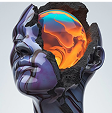

How Neural Networks mimic the human brain
Neural Networks, a cornerstone of modern artificial intelligence, are designed to replicate the way the human brain processes information. Just as neurons in our brain communicate through complex networks of synapses, artificial Neural Networks consist of interconnected nodes that transmit signals and learn patterns from vast amounts of data. These networks excel at recognizing patterns, making predictions, and solving problems that traditional algorithms struggle with.
By mimicking the human brain’s ability to learn and adapt, Neural Networks can improve over time, refining their outputs with experience.

Understanding the human brain connection
The human brain is composed of billions of neurons that communicate through intricate networks of synapses. Each neuron receives signals, processes them, and transmits responses to other neurons. Similarly, artificial Neural Networks consist of layers of interconnected nodes (or "neurons") that work together to process data and identify patterns. This structure allows AI systems to learn complex relationships between inputs and outputs, just as our brains learn from experience.
How Neural Networks learn
Training a Neural Networks involves feeding it large amounts of data and adjusting the strength of connections between nodes based on the accuracy of its predictions. This process, known as backpropagation, allows the network to gradually improve its performance over time. The more diverse and high-quality the training data, the better the model can generalize to new, unseen situations.
Layers and architecture
Modern Neural Networks typically include an input layer, one or more hidden layers, and an output layer. Deep learning refers to networks with many hidden layers, enabling them to capture increasingly abstract features—from edges and textures in images to semantic concepts like objects and scenes. Choosing the right architecture is crucial for the task at hand.

Real-world applications
Neural Networks power many technologies we use daily, including:
- Image and facial recognition – identifying patterns and features in visual data for security, photo organization, and accessibility.
- Natural language processing – powering chatbots, translation, summarization, and sentiment analysis across languages.
- Recommendation systems – personalizing content on streaming, e-commerce, and social platforms based on user behavior.
- Autonomous systems – enabling self-driving vehicles, robotics, and industrial automation through perception and decision-making.
E-commerce platforms leveraging AI-based personalization have seen up to a 20% increase in revenue, while content and product recommendations continue to drive engagement across industries.
Bridging biology and technology
By studying how Neural Networks mimic the human brain, researchers are gaining insights into both AI and human cognition. This synergy allows us to create machines that can think, learn, and solve problems in ways that were once considered purely human abilities.
Neural Networks not only demonstrate the power of artificial intelligence but also show how technology can emulate the complexity and adaptability of the human brain, opening doors to innovations across healthcare, finance, education, and countless other fields.
Related blog
5 AI Tools Every Business Needs to Streamline Operations